
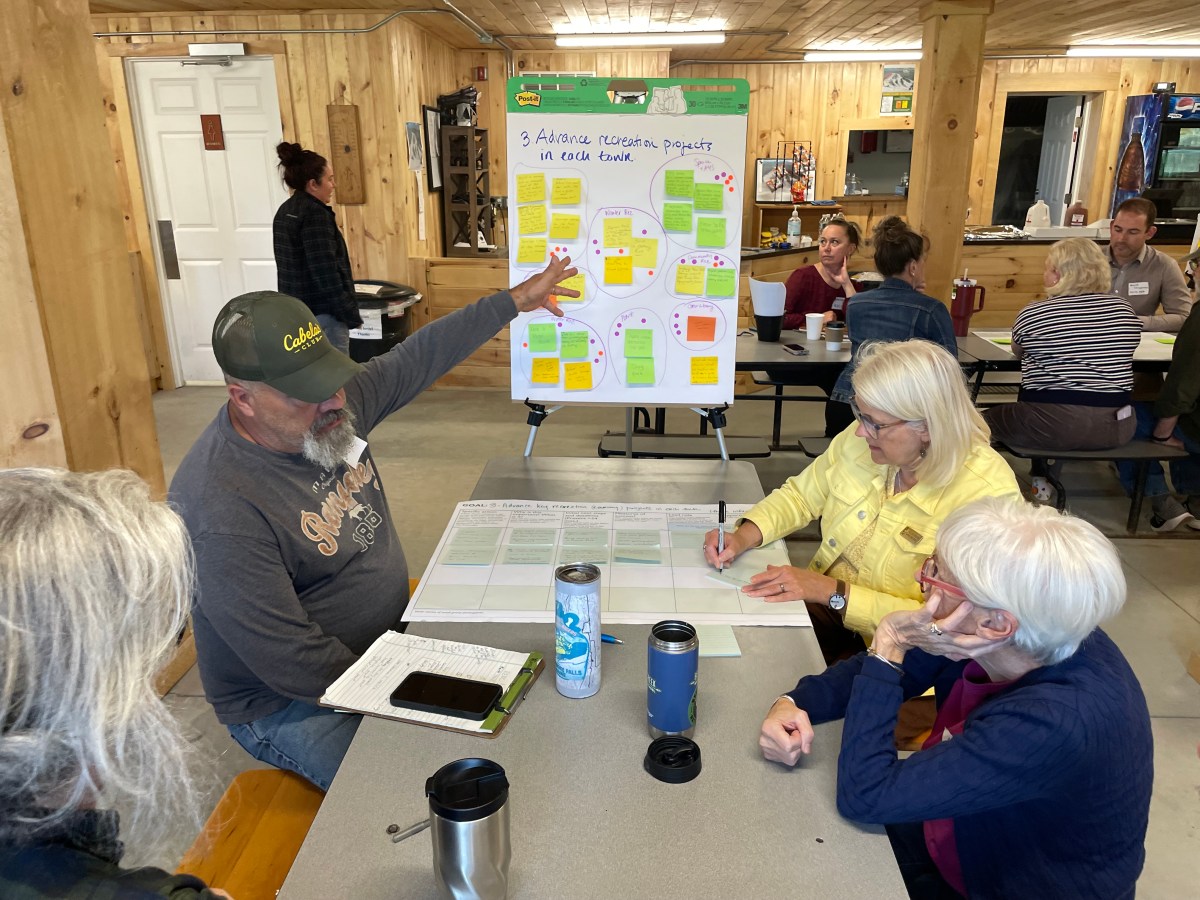
JAY — More year-round, outdoor events throughout Jay, Livermore and Livermore Falls was the priority for the more than 40 people who participated in a two-day regional workshop Sept. 30 and Oct. 1.
The Recreation Economy for Rural Communities workshop at Spruce Mountain Ski Slope brought together residents and local, state, regional and federal partners to review recreation assets, assess work already underway and identify resources and next steps for future projects.
Participants worked systematically from reviewing outdoor recreation assets and community progress to identifying current priorities and resources that could support specific strategies, according to Shelley Kruszewski, regional planner with the Androscoggin Valley Council of Governments.

Examples of work already underway included upgrades at Spruce Mountain Ski Slope and the Androscoggin Land Trust’s regional wayfinding project.
The resulting action-plan priorities are organized around three broad areas: growing local capacity, developing outdoor and downtown events and experiences, and continuing to improve year-round access to outdoor recreation amenities across the three-town region.
The workshop was built on the 2025 Recreation and Facilities Master Plan for Jay, Livermore and Livermore Falls, which identified opportunities to improve recreation facilities, strengthen connections among destinations and use outdoor recreation as part of a broader regional economic development strategy.
Before the workshop, Kruszewski said the workshop process was intended to move that planning into more detailed action steps, including timelines, milestones, financial and staffing needs, responsibilities and other work needed to advance projects.
“Emphasis will be on near term and implementable next steps needed to move forward,” Kruszewski said.
Participants also examined how individual recreation sites could complement one another as part of a connected regional network rather than operate as isolated facilities.
Projects and destinations previously identified for discussion included the Livermore Falls Recreation Area, French Falls, Area Youth Sports, Spruce Mountain Ski Slope and Spruce Mountain Conservation Area.
The workshop included a community tour during which members of the workshop steering committee and federal, regional and state partners examined recreation and downtown connections firsthand.
In Livermore Falls, participants discussed ways outdoor recreation could connect with the downtown. At the Jay Recreation Area, they discussed trail connections and opportunities for outdoor programming.
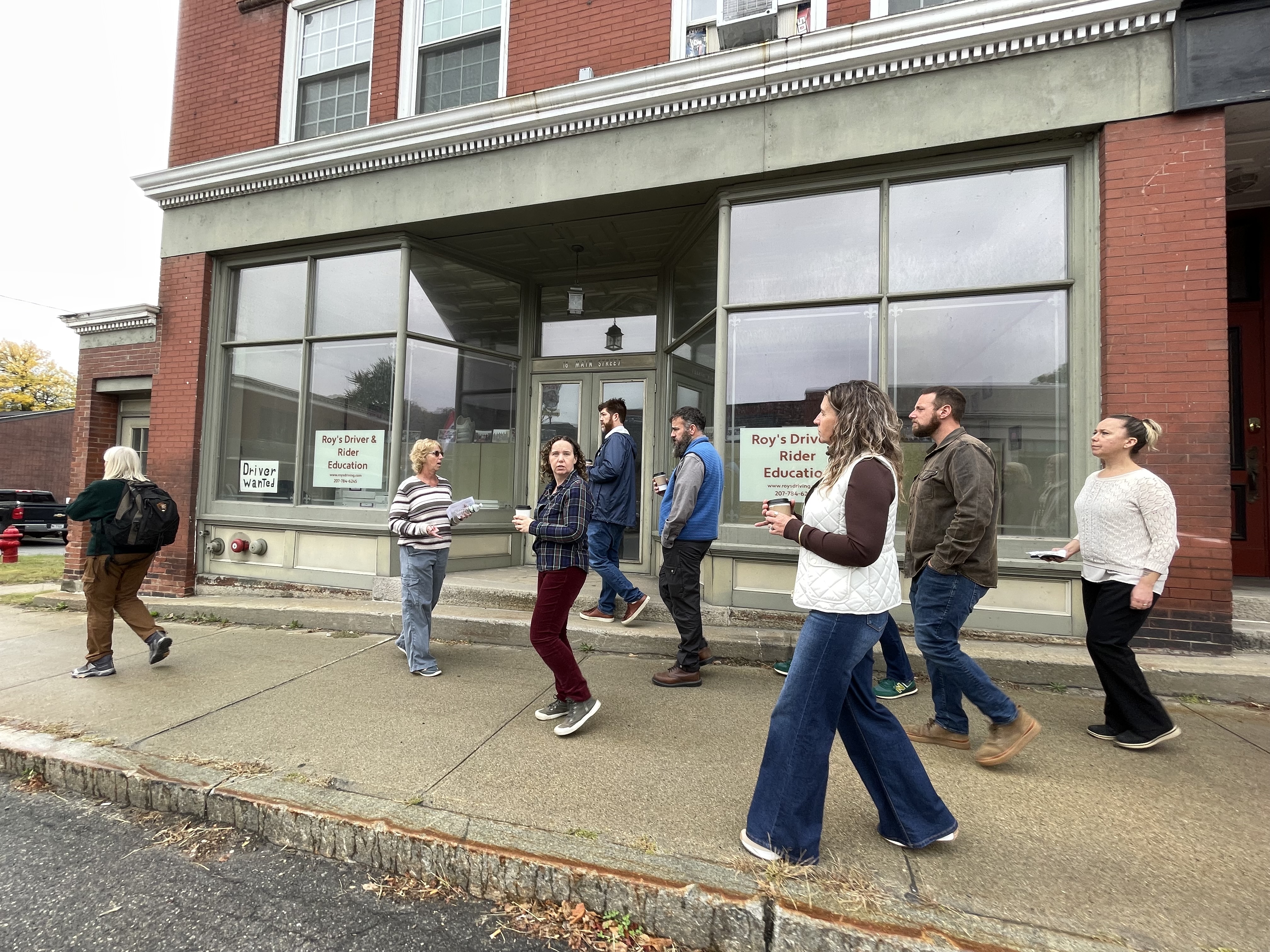
Those discussions reflected a broader goal of the workshop: connecting recreation assets with town centers and creating opportunities for residents and visitors to move between trails, recreation areas, businesses and downtown destinations.
“The workshop will also provide the opportunity to focus attention on placemaking and how outdoor recreation connects to the town centers,” Kruszewski said before the event.
The workshop also gave community members an opportunity to speak directly with agencies and organizations that may be able to help identify technical assistance, partnerships and potential funding sources.
“The value of having these partners at the table is that they can hear directly from the communities about their priorities and help identify technical assistance, funding programs, partnerships or other resources that may align with those goals,” Kruszewski said.
The Recreation Economy for Rural Communities program does not directly provide project funding. Participation, however, connects communities with government agencies, technical resources, other communities pursuing similar projects and potential funding programs. Kruszewski previously said some funding opportunities are limited to communities participating in the program.
The federal planning assistance program focuses on helping rural communities strengthen outdoor recreation economies while supporting Main Street revitalization.
The program involves the U.S. Environmental Protection Agency, USDA Forest Service, Northern Border Regional Commission, Appalachian Regional Commission and Denali Commission. Holly Fowler of Northbound Ventures Consulting is facilitating the local process, while Androscoggin Valley Council of Governments is coordinating with the three towns and the local steering committee.
The work also overlaps with a Tri-Town recreation branding and wayfinding project that grew out of the 2025 master plan.
Members of the Tri-Town Recreation Committee and steering committee previously supported a successful Rural Investment Project Grant application to create cohesive regional branding and wayfinding signs for recreation destinations. The Androscoggin Land Trust is leading that project.
The master plan identified promotion of key recreation areas, improved signs, co-branding and wayfinding as priorities.
The workshop’s action planning will continue beyond the two-day session. Organizers previously said the draft action plan would be refined through three post-workshop calls that will also be open to participants.
“The community’s input during the workshop becomes the centerpiece of the final deliverable of the planning process,” Kruszewski said.
She had also stressed before the workshop that local participation would be central to the process.
“This is a community-driven process,” Kruszewski said. “It only works if the community comes and shares their input.”

Supporting Sponsor for Franklin Journal, Livermore Falls Advertiser, Rangeley Highlander and Rumford Falls Times.
Keeping communities informed by supporting local news. franklinsavings.bank
We invite you to add your comments. We encourage a thoughtful exchange of ideas and information on this website. By joining the conversation, you are agreeing to our commenting policy and terms of use. More information is found on our FAQs. You can update your screen name on the member's center.
Comments are managed by our staff during regular business hours Monday through Friday as well as limited hours on Saturday and Sunday. Comments held for moderation outside of those hours may take longer to approve.
Join the Conversation
Please sign into your Sun Journal account to participate in conversations below. If you do not have an account, you can subscribe here. Questions? Please see our FAQs.