
Key Takeaways Key Takeaways are written by Maine Trust staff and highlight the most important points of this article so you can get the gist at a glance.
- A “No on Question 1” campaign launched Wednesday opposing Lewiston’s proposed syringe-service restrictions, which would require a 1-to-1 exchange, limit exchanges to 20 syringes per person per day, and require the city’s syringe service provider to operate from one fixed location.
- Speakers supporting “No on Question 1” said that beyond creating a reduction in access to sterile syringes, the restrictions could hurt other services without addressing waste, overdoses or infectious diseases.
- Proponents of Question 1 say the proposed ordinance changes would establish “a consistent, citywide standard that protects everyone.”
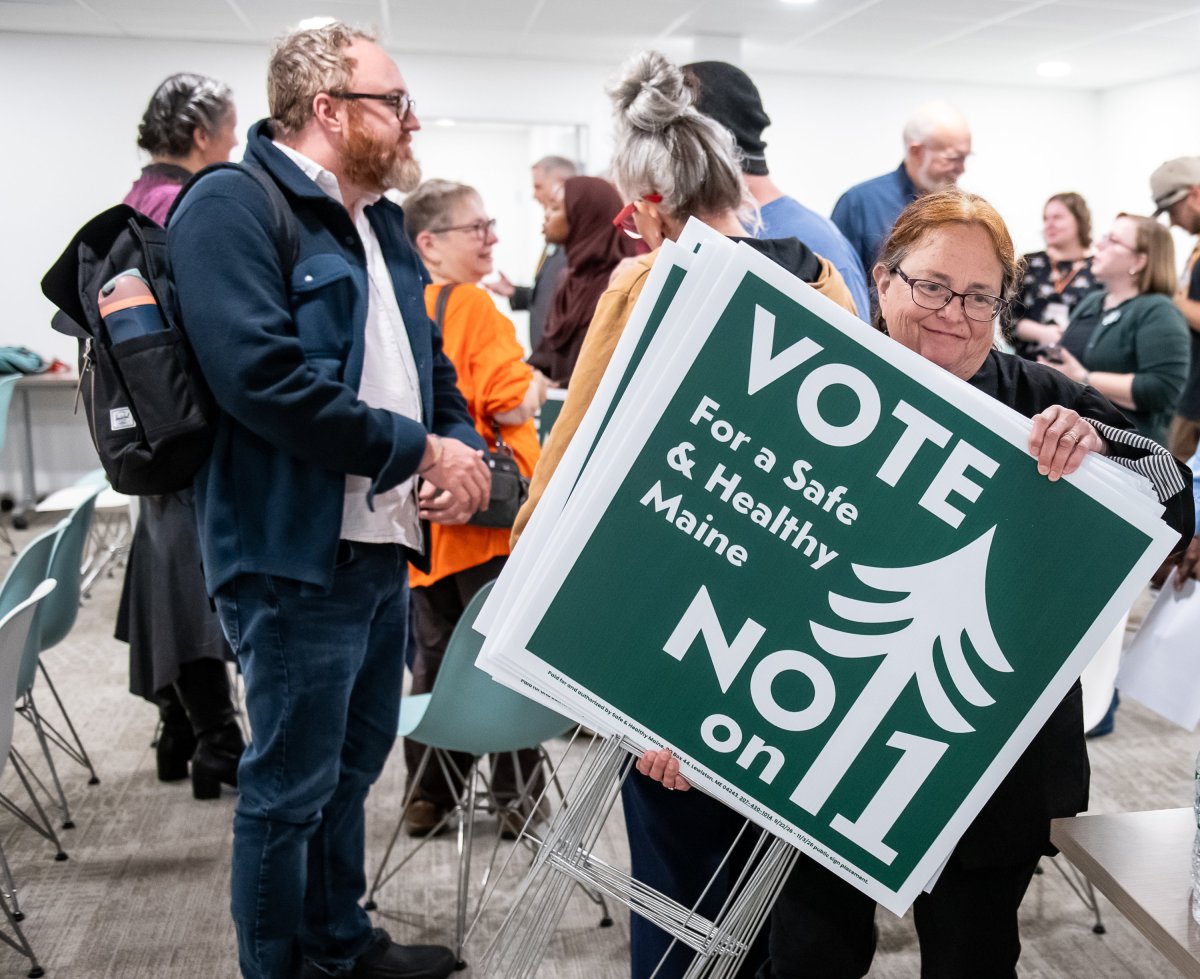
LEWISTON — A group calling itself Safe & Healthy Maine launched its campaign for “No on Question 1” in a news conference Wednesday.
Question 1 on the November city ballot asks voters if Lewiston’s Syringe Service Program should be amended to mandate a 1-for-1 needle exchange with a 20-syringe daily limit per person, require that each program provider operate from one fixed location, and prohibit mobile exchange units.
Speakers at the event included former state legislator Margaret Craven, Preble Street’s veterans director Laura Clark, the Rev. Sarah Bartlett of Norway’s Second Congregational Church, and doctors Paul Vinsel and Edward Walworth.
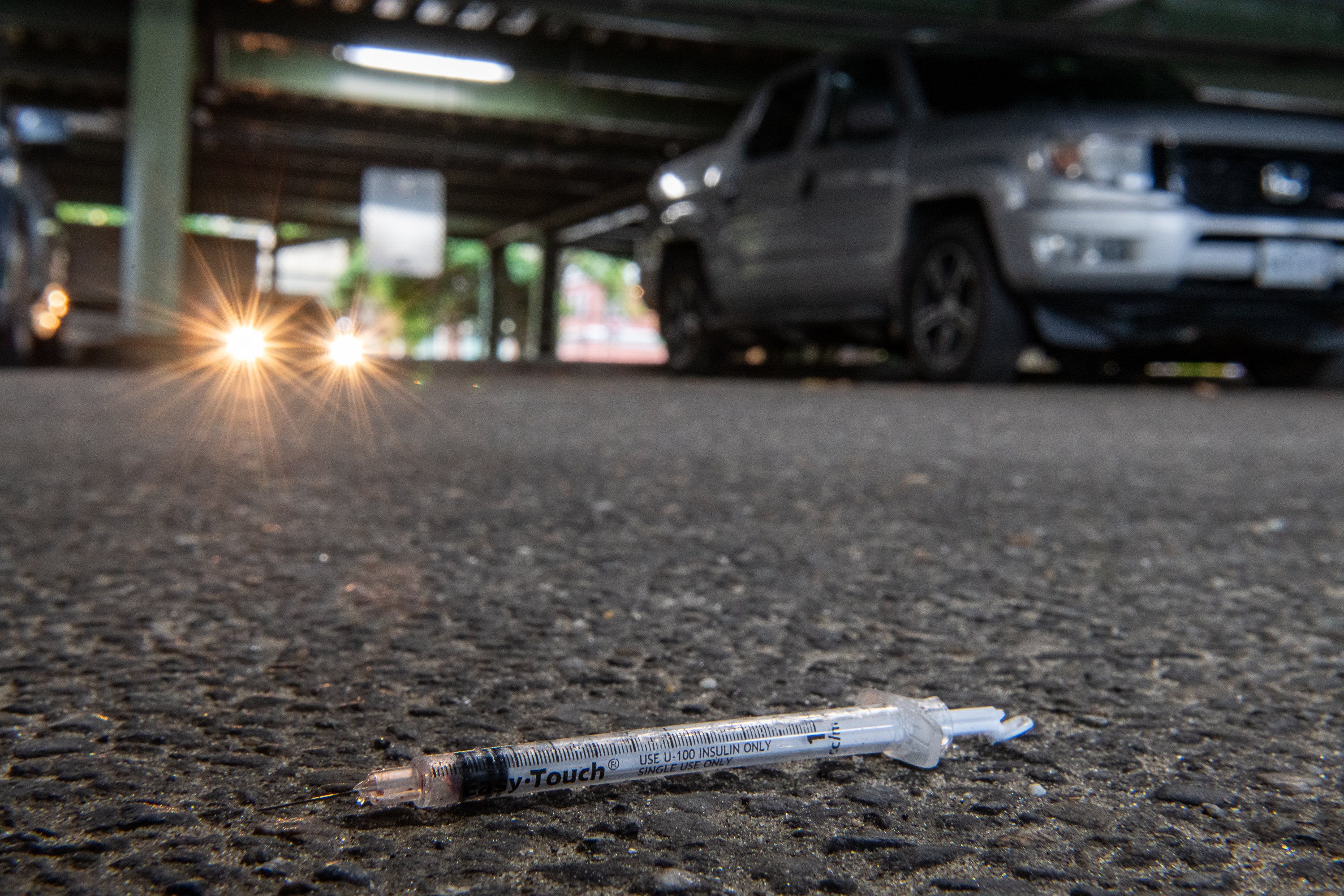
Speakers agreed that restricting syringe services programs would not only make syringe litter worse, but it could undermine public health services and exacerbate existing and future outbreaks of diseases such as HIV and hepatitis C.
Walworth, a retired general surgeon, said proponents of Question 1 are claiming that proposed restrictions would reduce syringe waste.
But restricting syringe programs is associated with more syringe waste, not less, Walworth said.
He added, “ When we restrict access to a proven public health tool without evidence that these restrictions will solve the problem we are trying to address, those problems don’t disappear,” Walworth said. “Instead, we risk creating new preventable costs and burdens for our healthcare system and our community.”
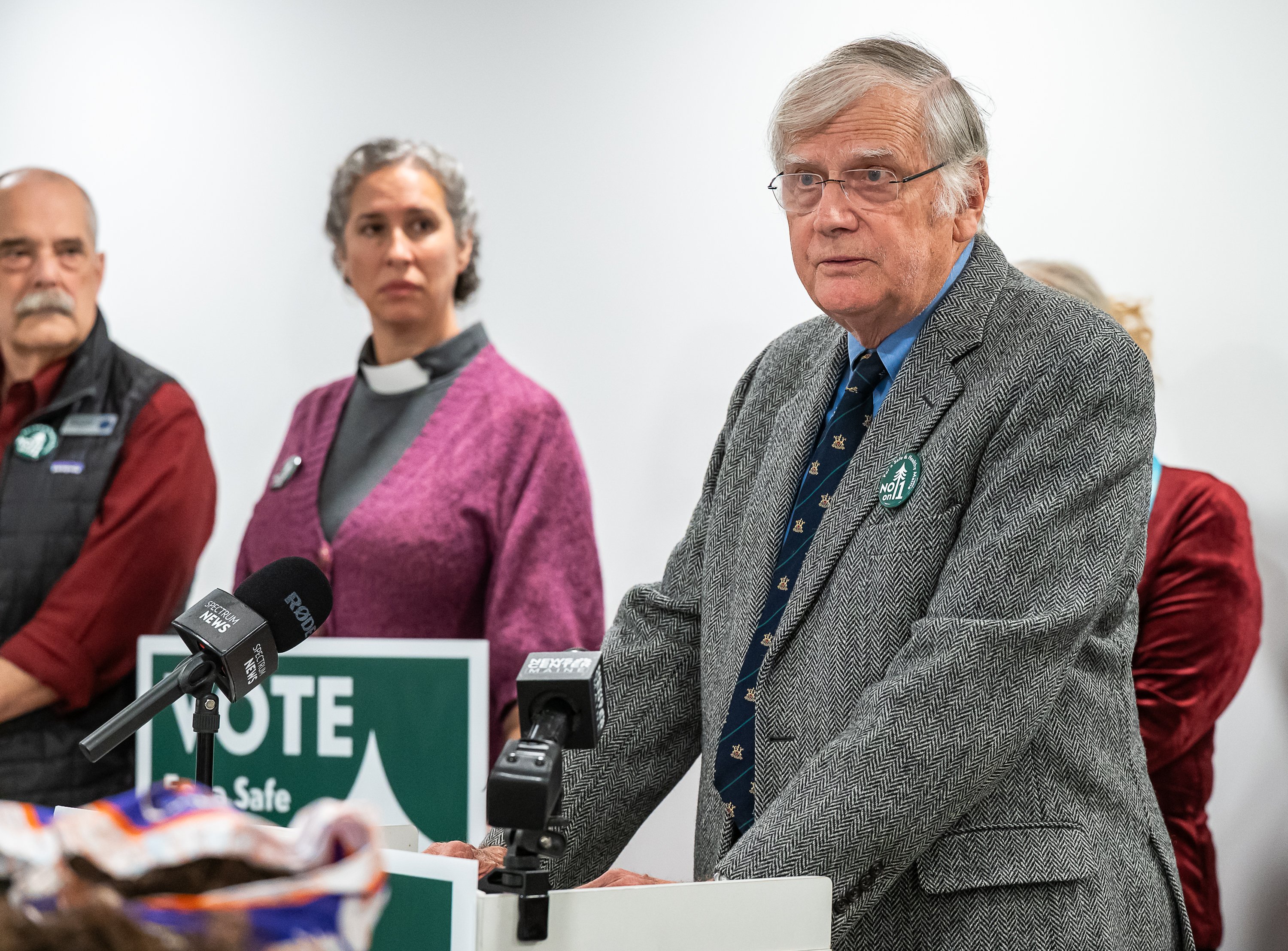
Vinsel said his experience as an emergency medicine and addiction medicine doctor in Lewiston brought him patients suffering from the consequences of shared needles and needle reuse, including skin infections, abscesses, sepsis, heart and lung infections, as well as HIV and hepatitis C.
If most of these patients had access to a syringe program, their ailments could have been preventable, Vinsel said.
“ People who use syringe service programs are five times more likely to enter treatment than people who do not use these services,” Vinsel said, adding that those who use syringe programs are three times more likely to stop using drugs. “The data is clear that these programs save lives. … Question 1 would set a dangerous precedent of ignoring evidence-based approaches to fighting the opioid epidemic.”
Despite Question 1 specifying it, the city’s existing rules governing the Lewiston Syringe Service Program already require syringe programs to obtain a city business license and to operate from a fixed location, and they prohibit mobile units. The state’s syringe-service requirements allow a person to receive up to 100 syringes per encounter.
During the long process of drafting those rules, then-Councilor Eryn Soule supported a 1-to-1 needle exchange that was rejected by the council.
Soule, who is running as an independent in Maine Senate District 21, and her husband, Marcel Leclair, who is running for Lewiston’s Ward 5 school board seat, spearheaded the Question 1 citizens petition earlier this year. The petition gathered 25 signatures more than the 941 required, putting it before the council.
The council voted not to pass the ordinance and to instead send it to voters for the Nov. 3 elections.
Soule said the referendum is about more than discarded needles — it is about “establishing a consistent, citywide standard that protects everyone” including those who utilize syringe programs and the broader Lewiston community.
“It is important to remember that a strict 1:1 exchange ratio was the Maine CDC’s original baseline prior to the pandemic … (when) our streets didn’t face the level of mass needle litter or open public drug use we see today,” she said. “What began as a well-intentioned harm reduction effort has evolved into a system that leaves hazardous conditions in the very neighborhoods where our families live, work and play.”
Soule said compassion and medical support must go hand in hand, and that without mandatory HIV and hepatitis C testing for those who use syringe services, “there is no way to ensure these programs are actually improving health outcomes or connecting people to the life-saving medical care they desperately need.”
“Meanwhile, every unreturned syringe represents a very real danger left behind in our community,” Soule said. “A strict 1:1 exchange ratio, paired with daily limits, restores accountability and helps keep our public spaces clean.”
In the first year following the implementation of Question 1, the public should see a noticeable and measurable drop in discarded needles across the city, Soule said.
Asked about the perception that a 100-syringe limit as required by the state means countless syringes are hitting Lewiston streets, No on Question 1 spokesperson Cara Courchesne said that perception is incorrect. She cited Lewiston’s only syringe program operator, Spurwink, actually having collected 38% more syringes than it gave out last year.
“It’s understandable that people have that perception, because we have had an SSP not do as well as we wished here,” Courchesne said, referring to a Syringe Service Program provider no longer in the city. “But if you want to see less needles and syringes in the street, you do not restrict the program that helps get you there.”
The Rev. Bartlett said syringe programs improve the overall health of communities.
“They are a critical part of preventing overdoses and disease, and help people find pathways to treatment,” she said. “That is important to saving people in our community.”
We invite you to add your comments. We encourage a thoughtful exchange of ideas and information on this website. By joining the conversation, you are agreeing to our commenting policy and terms of use. More information is found on our FAQs. You can update your screen name on the member's center.
Comments are managed by our staff during regular business hours Monday through Friday as well as limited hours on Saturday and Sunday. Comments held for moderation outside of those hours may take longer to approve.
Join the Conversation
Please sign into your Sun Journal account to participate in conversations below. If you do not have an account, you can subscribe here. Questions? Please see our FAQs.