
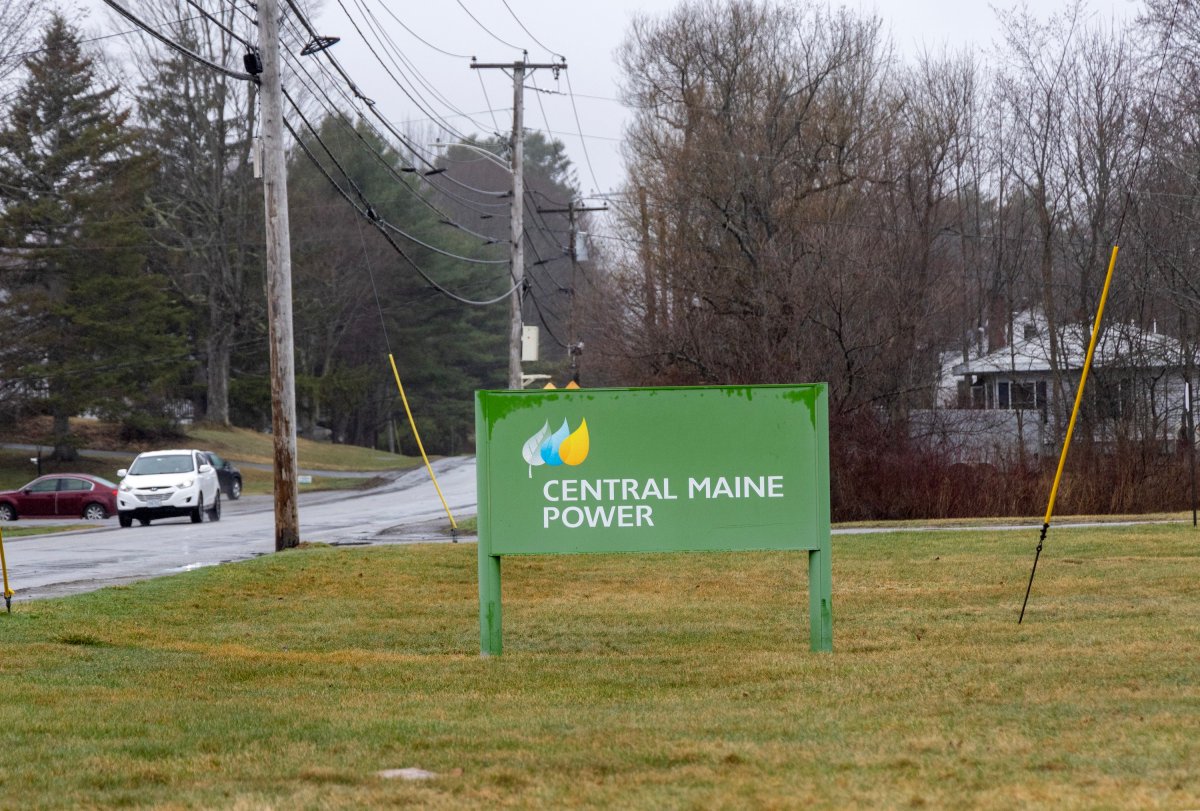
Maine utility regulators denied Central Maine Power Co.’s request for almost $70 million in increased rates on Tuesday, a major win for advocacy groups that means bills will not increase this fall.
The Maine Public Utilities Commission’s unanimous denial of CMP’s bid to increase the average household’s bill by about $7 per month comes with potentially serious financial consequences for the utility, company representatives said in filings before Tuesday’s hearing. A CMP executive told employees last week that the company would reconsider workforce levels if the PUC denied its request.
Current distribution rates are likely to remain in place until the spring, when regulators are expected to decide on the merits of the utility’s full $189 million rate case.
State law allows utilities to recoup “temporary rates” during a longer case, as long as the amount they’re seeking to raise is agreed upon. That’s what CMP was seeking here: the first step of a two-part rate increase, intended to help pay for infrastructure CMP has built in recent years.
The PUC had recommended this approach last year when it dismissed CMP’s five-year plan, which would have raised the average household’s bill by about $35.
But the three members of the Maine Public Utilities Commission agreed Tuesday that intervening groups — from the Office of the Public Advocate to the Department of Energy Resources to consumer advocates — had disputed all $69.3 million of CMP’s ask, and that they therefore could not allow the utility to raise rates.
The commission’s decision aligned with the recommendation of its staff last month.
Much of the dispute was based on return on equity — the return CMP’s shareholders can make on the company’s capital projects. Return on equity is the only way a utility monopoly can make profit under Maine’s regulatory structure, and it’s become a focal point in the rate case.
About two-thirds of CMP’s temporary rate ask was to right-size its return on equity, which the company said was necessary to attract investment and maintain its credit ratings.
“I simply could not pinpoint a number that I would feel comfortable saying was not in dispute in this matter,” PUC Chair Philip Bartlett said during deliberations Tuesday.
Bartlett also said that, since the utility has exceeded its capital spending forecast by about 50% from 2022 to 2025, “to some extent, this is a problem of CMP’s own making.”
In the eight days since PUC staff recommended the commissioners reject CMP’s increase, the utility has removed 70 job postings for line workers and customer service positions, paused plans to improve 19 transformers servicing thousands of customers from York to Rangeley, and halted several other infrastructure projects.
A spokesperson for CMP did not respond Tuesday to a request for comment, but in a filing before the hearing Tuesday, the company said it would be hit hard by a denial.
In addition to deferring upgrades to its grid infrastructure and pausing hiring, CMP said it would be forced to “consider workforce reductions.” The company’s financial outlook was downgraded this summer by S&P Global Ratings to “negative” because of lag in this rate case and a $100 million cash flow deficit.
“Customers do not experience regulatory delay in the abstract,” attorneys for CMP wrote to regulators last week. “They experience it through aging transformers, deferred maintenance, postponed reliability projects, and infrastructure that continues operating long after it should have been replaced.”
Linda Ball, the president and CEO of CMP, said in a Sept. 28 email to employees that it would be irresponsible for the utility not “to carefully evaluate current workforce levels, hiring plans and apprenticeship programs” given the “regulatory challenges we face.”
“I recognize that news like this creates uncertainty and concern,” Ball said in the email. “Please know that our leadership team takes these challenges seriously and remains focused on supporting our employees, maintaining safe and reliable service for our customers, and advocating for the investments necessary to sustain Maine’s electric system for the long term, while balancing the impacts this situation has on the business.”
No decisions about workforce levels have been made, Ball wrote. CMP employs almost 1,000 people, the company’s website says.
Meanwhile, the PUC decision marks a substantial win for advocacy groups, which have fought CMP’s rate increase at each step.
Fight the Hike, a coalition of advocacy groups opposed to CMP’s increase, celebrated the PUC’s decision in a news release and said it would continue to oppose the utility’s efforts to raise rates in the next several months.
“(Delaying grid projects is) an attempt at blackmail,” Seth Berry, the executive director of coalition member Our Power, said in the release. “Unlike any other business, CMP has a monopoly. This is a privilege granted to them by the people of Maine. It’s time for CMP shareholders to start funding grid maintenance from their $160 million in annual profits — not squeezing still more from struggling families.”
Heather Sanborn, the state’s public advocate, said she applauded the PUC’s decision to wait to increase rates until the end of the yearlong proceeding. Any increase should be decided on its merits, she said, and should take into account affordability concerns.
Rebecca Schultz, the clean energy expert for the Natural Resources Council of Maine, one of the intervening parties in the case, applauded the PUC’s decision, especially in the face of rising costs in other areas.
Schultz also criticized CMP’s response.
“In the past few weeks, facing reasonable and completely foreseeable pushback to their request, the company chose to threaten Mainers with cutting union jobs and delaying important safety and reliability upgrades that were already underway,” she said in a statement. “This is unacceptable behavior for any company granted a monopoly business opportunity in Maine.”
The ruling Tuesday is likely to be the final major decision during Bartlett’s tenure as the PUC’s chair. After seven years leading the commission, Bartlett announced last month that he’d be stepping down Friday to move into the private sector.
We invite you to add your comments. We encourage a thoughtful exchange of ideas and information on this website. By joining the conversation, you are agreeing to our commenting policy and terms of use. More information is found on our FAQs. You can update your screen name on the member's center.
Comments are managed by our staff during regular business hours Monday through Friday as well as limited hours on Saturday and Sunday. Comments held for moderation outside of those hours may take longer to approve.
Join the Conversation
Please sign into your Sun Journal account to participate in conversations below. If you do not have an account, you can subscribe here. Questions? Please see our FAQs.