
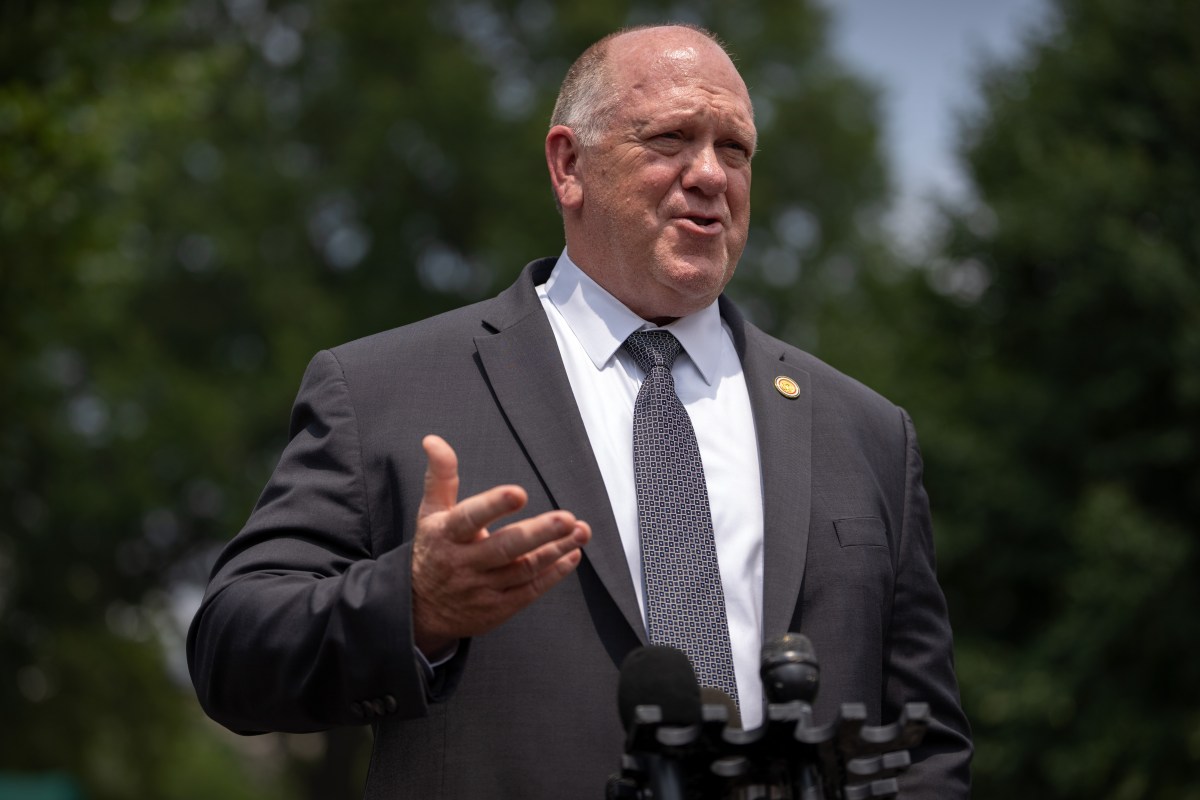
The Trump administration’s border czar visited Maine’s northern border last week, according to a spokesperson for the White House.
Tom Homan told a state representative that he came to Maine to meet with officials from U.S. Customs and Border Protection and U.S. Immigration and Customs Enforcement, as first reported by the Bangor Daily News.
“You’re going to see a lot more enforcement action in Maine,” Homan said, according to a video posted to Facebook by Rep. Mike Soboleski, R-Phillips.
Homan made the remarks on Aug. 18, ahead of his Maine visit, during an event by the Federation for American Immigration Reform in Alexandria Bay, New York.
He said he planned to visit the state in the wake of a recent U.S. Supreme Court ruling in favor of the Trump administration’s efforts to end legal immigration status for hundreds of thousands of people from Haiti and Syria. In Maine, hundreds of people have Temporary Protected Status, also referred to as TPS.
“I know you guys took on a lot of refugees over the past few years, a lot under Joe Biden,” Homan said of Maine, according to Soboleski’s video. “As you know, we’re revetting all those refugees now. A lot of TPS people in Maine. They’re not going to be there much longer either.”
A CBP spokesperson referred a reporter to the White House for more information about Homan’s visit. The White House did not provide additional details.
Homan’s trip to Maine came days before Vice President JD Vance appeared Monday at Compotech, a defense technology manufacturer in Brewer — his second visit to Maine in the past few months.
Social media posts circulating this week also appear to show former U.S. Border Patrol commander Greg Bovino in Portland. It’s unclear why.
Comments are not available on this story. Read more about why we allow commenting on some stories and not on others.
We believe it's important to offer commenting on certain stories as a benefit to our readers. At its best, our comments sections can be a productive platform for readers to engage with our journalism, offer thoughts on coverage and issues, and drive conversation in a respectful, solutions-based way. It's a form of open discourse that can be useful to our community, public officials, journalists and others.
We do not enable comments on everything — exceptions include most crime stories, and coverage involving personal tragedy or sensitive issues that invite personal attacks instead of thoughtful discussion.
You can read more here about our commenting policy and terms of use. More information is also found on our FAQs.
Show less